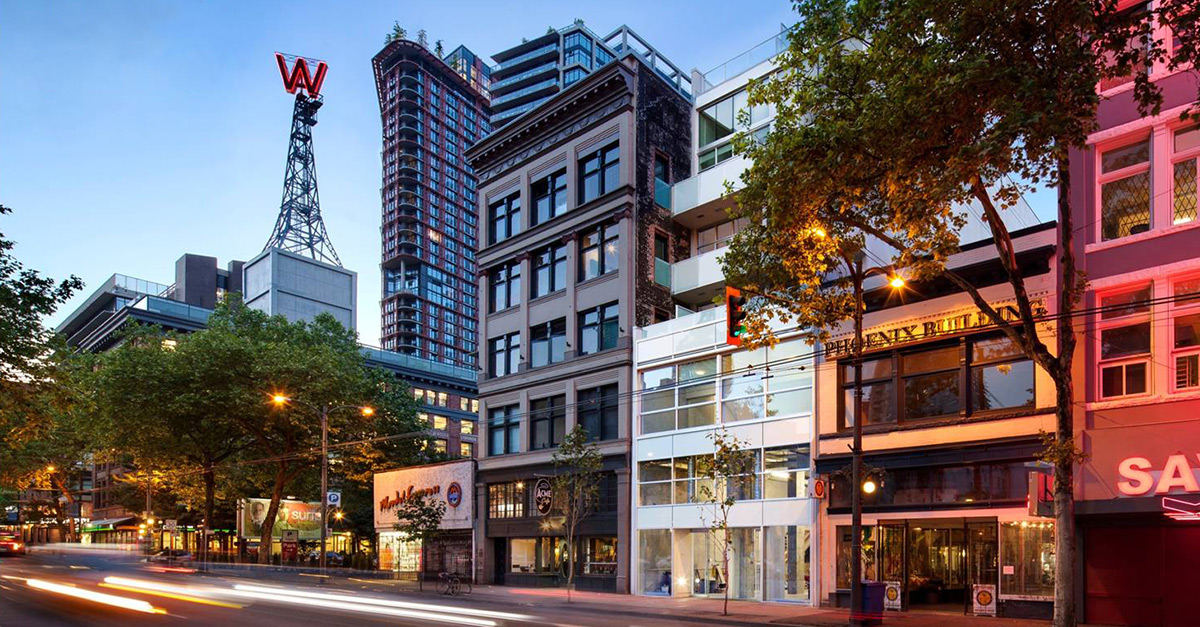
I think we can all agree that Vancouver, No. 1 rankings to the contrary, has managed to erect some of the least attractive buildings in the urban world. Every time I travel to any standard American city (Minneapolis currently), I’m shocked to see how many truly lovely houses, interesting mid-rise apartments, and beautifully designed office buildings they have in comparison to Vancouver.
Yes, we do have some well-designed buildings and neighbourhoods — both old and new. But, sorry, folks, there is still a lot of the single-family housing that looks like it was built from the Home Depot remainder bin. There are condos that have gone up recently (the Aquilini reproduction of London council housing next to the Cambie Bridge, to name one) that are a blight. And we have a disproportionate number of office buildings from the 1980s “mid-western insurance head office” architectural school.
So anything that might improve standards is to be welcomed, like these new City of Vancouver urban-design awards. Hope there is more than one entry per category.
Vancouver’s architectural mediocrity stems from multiple converging factors that create a perfect storm of bland design. The city’s rapid growth has prioritized speed over aesthetics, while aggressive real estate markets reward developers for maximizing square footage rather than architectural innovation. Municipal approval processes often favor predictable, risk-averse designs that won’t generate neighborhood opposition or lengthy permit delays.
The “Vancouver Special” phenomenon exemplifies this challenge – practical but aesthetically challenged housing that dominated residential construction for decades. Similarly, the condo boom produced countless glass towers distinguished mainly by their interchangeability. These buildings reflect market pressures where profit margins leave little room for architectural creativity or quality materials.
Compounding the problem is Vancouver’s relative youth as a major city. Unlike Minneapolis or other American cities with century-old architectural heritage, Vancouver lacks the historical building stock that provides design inspiration and urban character. The city’s architecture reflects its boom-town mentality, where functional efficiency trumped aesthetic consideration.
The new urban design awards represent recognition that Vancouver’s international reputation for livability shouldn’t excuse architectural banality. Cities like Melbourne and Copenhagen prove that rapid growth can coexist with design excellence through strong planning frameworks and architectural standards.
Success requires moving beyond reactive criticism toward proactive design leadership, encouraging both emerging architects and established developers to view good design as competitive advantage rather than expensive luxury.