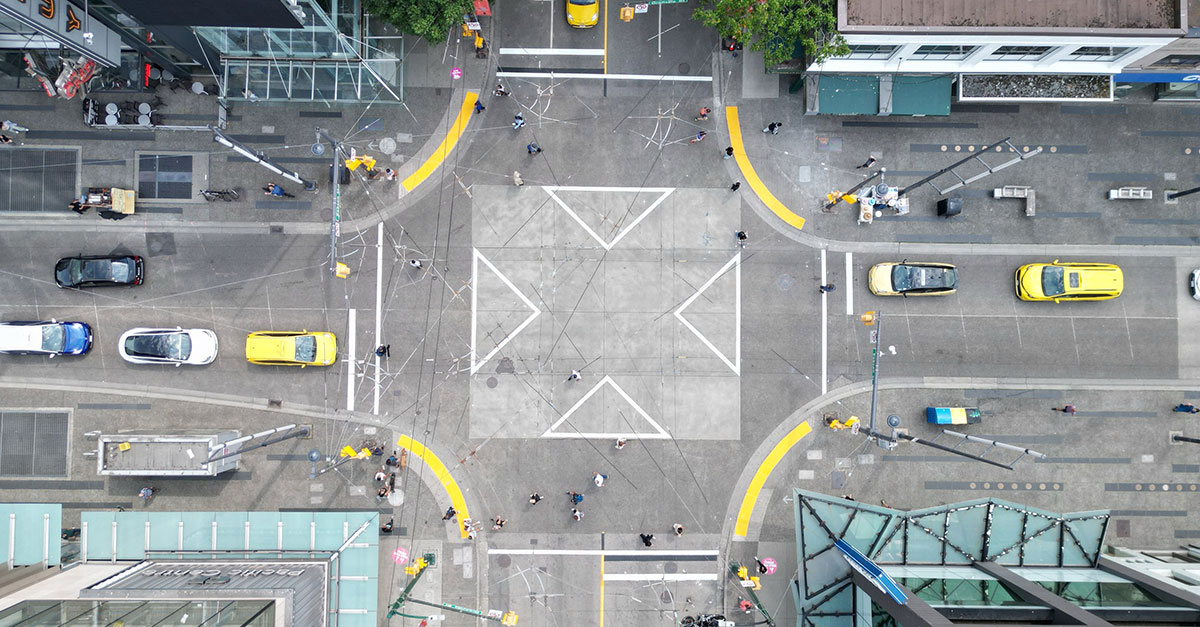
A small brief in the local media last January caught my eye: a 27-year-old had been hit in a pedestrian crosswalk near my house, but he had no identification and police were trying to figure out who he was.
The next blurb said he had died in hospital. Police never released his name. But the little mention stuck in my head. My son is 27 — the age when you think your kids are safe. So I kept trying to find out what happened.
My column in Vancouver magazine coming out soon tells the story of who that young man was and what happened. I also discovered, along the way, just how many pedestrians are killed in Vancouver — far more than Toronto and Montreal. Some of it can be explained by the fact that we have more walkers here, although you’d think, if there are more walkers, there’d be more precautions in place to make sure they don’t get run down.
Other cities have drastically lowered their pedestrian deaths by trying out different strategies and going on aggressive campaigns. Montreal, which had 27 deaths two years ago, had only four by the end of May, when I wrote this story.
The anonymous young man’s death crystallized a disturbing pattern that Vancouver’s pedestrian safety advocates had been tracking for years. Despite the city’s reputation for walkability and environmental consciousness, its pedestrian fatality rate consistently exceeded larger Canadian cities with presumably more dangerous traffic conditions.
The paradox of Vancouver’s high pedestrian deaths amid its walking culture reveals complex urban design failures. While the city promoted itself as pedestrian-friendly, its infrastructure often prioritized vehicle flow over pedestrian safety. Wide arterial streets, poorly timed signals, and inadequate crosswalk visibility created deadly conditions for the very pedestrians the city claimed to support.
Montreal’s dramatic reduction from 27 to four deaths demonstrated that aggressive intervention could yield rapid results. Their comprehensive approach combined engineering solutions (better lighting, signal timing, crosswalk design), enforcement campaigns targeting dangerous driving behaviors, and education programs for both drivers and pedestrians.
Vancouver’s higher pedestrian volumes should have motivated superior safety infrastructure, not excused higher death rates. Cities with significant walking populations typically invest heavily in pedestrian protection because they understand the economic and social value of safe street environments.
The personal dimension of each fatality—young people like the unnamed 27-year-old—underscored how statistical improvements translate to real families spared devastating losses. Vancouver’s failure to match other cities’ safety improvements represented both policy failure and moral negligence toward its most vulnerable road users.