Surrey’s efforts to remake itself as an urban place, rather than just a bedroom suburb, are exciting and have generated significant media coverage. What that coverage—some of it mine—doesn’t always convey is the reality of what an enormous undertaking this transformation represents.
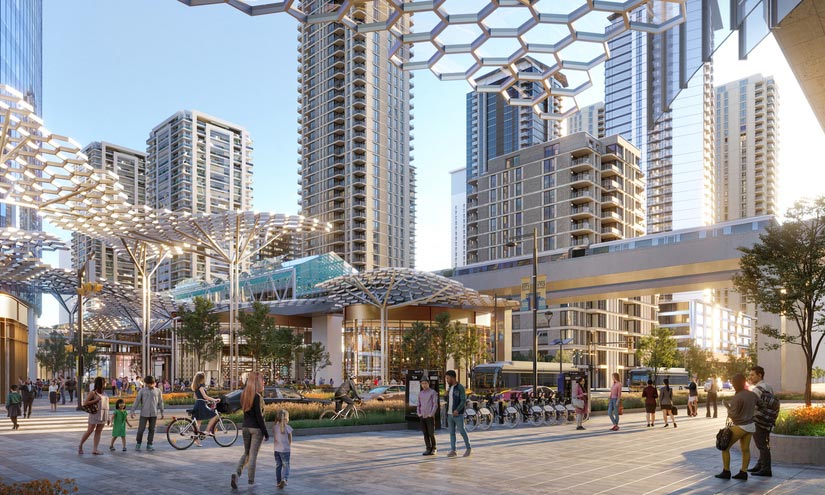
The challenge becomes starkly apparent when you consider Surrey’s starting point. Unlike cities revitalizing existing downtowns, Surrey doesn’t even have a vestigial version of a downtown at the Surrey Central SkyTrain station that it’s trying to fashion into its urban core. When Mayor Dianne Watts started talking about creating a downtown in 2005, there was really almost nothing there that resembled a normal city center: a tower built on top of a mall, sprawling big-box parking lots, countless low-end fast-food joints, vacant fields, and scattered older houses and apartment buildings in the distance.
This isn’t a question of revitalizing or adding to an existing downtown—it’s literally creating one from whole cloth, an unprecedented municipal experiment in urban genesis.
In my story for the Globe on the opening of the city’s striking new $97-million city hall, I addressed some of the formidable challenges Surrey faces. The ultra-modern, glass-fronted building represents Watts’ architectural trump card, designed to serve as both civic symbol and economic catalyst. Yet the 180,000-square-foot structure, with its black marble walls and slate floors, stands as an expensive bet that municipal investment can trigger private development.
The fundamental challenge is competition. Surrey must lure offices away from established downtown Vancouver while simultaneously competing with other suburban centers like Burnaby and Richmond for the corporate tenants essential to any functioning downtown. The retail ecosystem that creates street-level vibrancy remains largely absent, leaving the area dependent on residential towers and institutional anchors.
Current momentum relies heavily on municipal spending—close to $200 million in civic infrastructure—and a pipeline of condominium projects. The new city hall joins the existing Central City complex and planned library expansion as attempts to create critical mass, but attracting the diverse mix of businesses, services, and entertainment venues that define successful downtowns requires sustained market demand.
Surrey’s ambitious vision faces additional obstacles: the sheer scale of the municipality (two-and-a-half times Vancouver’s size), competition from six other designated town centers within Surrey itself, and the ingrained commuter patterns that direct office workers toward established business districts.
The 2014 relocation of City Hall was specifically intended to demonstrate municipal commitment and spur private investment. Yet Metro Vancouver studies noted the area still contained “few large modern office buildings,” highlighting the chicken-and-egg dilemma facing Surrey’s downtown dreams.
That’s not to say this transformation won’t happen—Surrey’s rapid population growth and strategic transit connections provide solid foundations. But creating a genuine downtown from suburban sprawl requires sustained, focused effort over decades, not years.