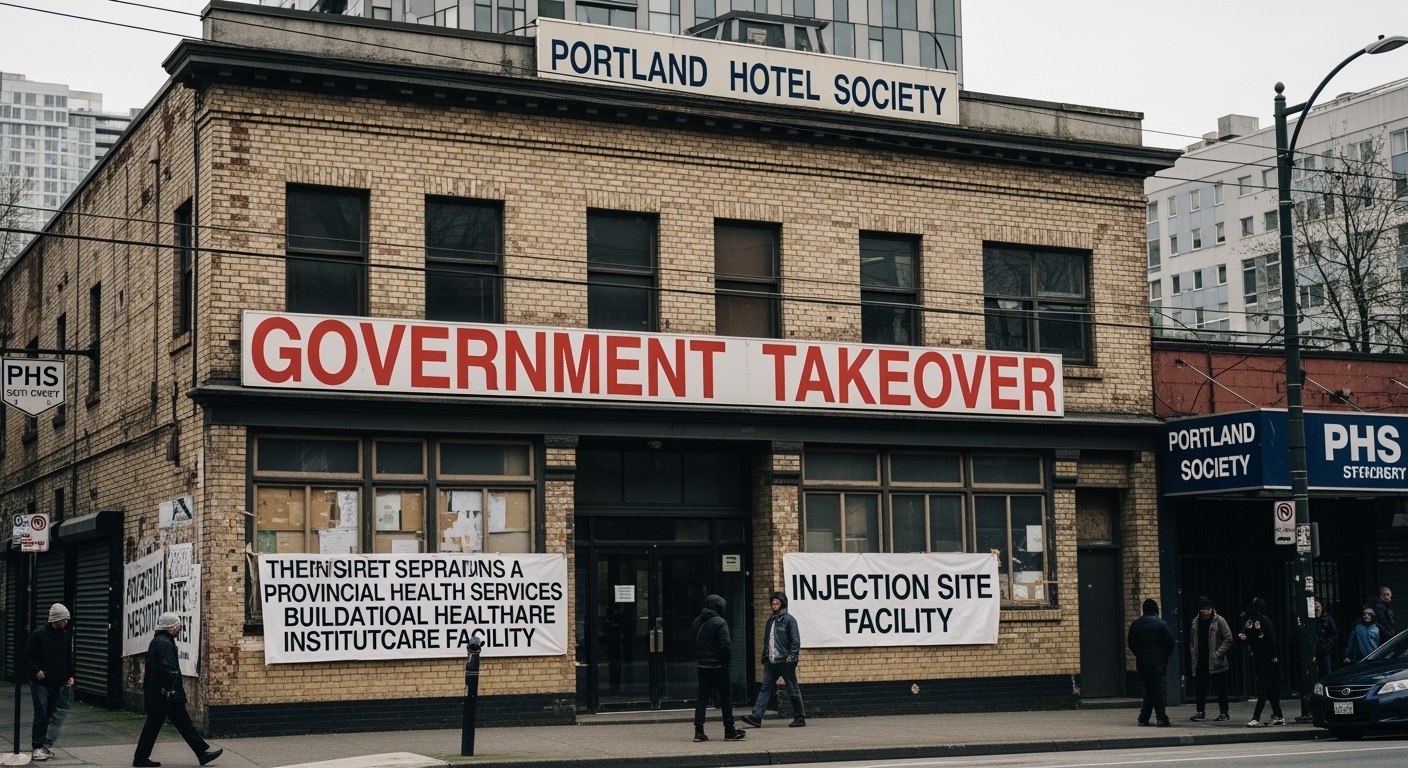
Mark Townsend and Liz Evans of PHS Community Services tried one last time to make the case to the provincial government that there were no problems at their organization that couldn’t be fixed with some good will. But they acknowledged, in the end, that the province had simply lost faith in them after a devastating audit revealed financial irregularities that shook the foundations of Canada’s most influential harm reduction organization.
Last Thursday, they agreed to step aside, bringing to an end one of the most remarkable chapters in Vancouver’s social service history. They told all their staff Saturday what was happening, ending two decades of pioneering work that transformed how Canada approaches addiction, homelessness, and mental health services.
The province is now on the verge of installing a new board for the non-profit, one that includes former Vancouver Coastal Health leader Ida Goodreau and former PHS board member Jim O’Dea. The takeover represents an extraordinary intervention in an organization that operated North America’s first legal supervised injection site and became a global model for harm reduction services.
The fall from grace has been swift and dramatic. Just weeks ago, a provincial audit revealed that PHS had spent thousands of dollars on luxury hotels, limousines, cruises, and high-end meals while serving some of Vancouver’s most vulnerable residents. The audit showed the organization was more than $130,000 into its bank overdraft and had drawn $1.2 million from a line of credit, raising serious questions about fiscal management.
Townsend reportedly racked up particularly high meal and travel expenditures, creating an uncomfortable contrast with the organization’s mission to serve people living in extreme poverty in the Downtown Eastside. The financial revelations came as a shock to supporters who had long admired PHS for its grassroots approach and willingness to challenge conventional wisdom about addiction treatment.
It’s been a long, incredible journey for this group that began as a radical experiment in harm reduction and grew into a $40-million-a-year empire spanning housing, health services, and advocacy. Founded by Evans, Townsend, and colleagues including Kerstin Stuerzbecher, Dan Small, and Tom Laviolette, PHS pioneered approaches that seemed revolutionary when they launched in the 1990s.
The organization’s crown jewel was InSite, the supervised injection facility that opened in 2003 after years of advocacy and research. The facility survived multiple legal challenges, including attempts by the federal Conservative government to shut it down, and provided crucial evidence that harm reduction saves lives and reduces crime. InSite became a pilgrimage site for addiction specialists worldwide and helped establish Vancouver as a global leader in progressive drug policy.
But success brought scrutiny, and PHS’s confrontational approach increasingly put it at odds with government funders. Townsend and Evans had a reputation for pushing back against bureaucratic constraints, arguing that serving marginalized populations required flexibility that traditional non-profits couldn’t provide. Their willingness to house people others wouldn’t touch and operate services others wouldn’t fund made them essential—and difficult.
The organization grew rapidly, operating dozens of housing units, multiple health facilities, and innovative programs that integrated services in ways that traditional agencies couldn’t match. PHS buildings became community hubs where residents could access everything from addiction treatment to art therapy under one roof.
The leadership transition raises fundamental questions about the future of harm reduction services in Vancouver. Will new management maintain PHS’s innovative edge, or will increased oversight constrain the organization’s ability to respond quickly to emerging needs? Many fear that bureaucratization could diminish the grassroots sensibility that made PHS effective.
The scandal also threatens to undermine public support for harm reduction approaches just as Vancouver faces an escalating overdose crisis. Critics of safe injection sites and unconventional housing models may point to PHS’s financial problems as evidence that such programs lack accountability.
My story [linked] has many more details about this dramatic transition and what it means for the future of Downtown Eastside services.