No wonder Vancouver is always in an uproar about some development or another. There’s just so much of it in the city, as I was made aware when someone pointed me to the statistics on housing starts in the region.
Vancouver, in spite of being an almost built-out city and with very little greenfield (never built on) land available, has the most residential construction going on of any municipality, and by a long shot. So far this year, 3,500 units under construction in the city, compared to 1,400 in Burnaby, 900 in Surrey.
That’s because development in Vancouver is so much more certain — for sure, everything will get sold and, for sure, it will be for a good price. Which is what is making the city eternally attractive.
The Economics of Urban Density
The statistics reveal a fundamental truth about Vancouver’s real estate market: developers are following the money, and the money is concentrated in the city’s most desirable, transit-accessible neighborhoods. This concentration isn’t accidental—it’s driven by a perfect storm of factors that make Vancouver’s core areas irresistible to both developers and buyers.
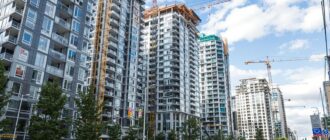
Construction cranes dot Vancouver’s skyline, evidence of the city’s building boom
The 3,500 units under construction represent more than double the activity in Burnaby and nearly four times that of Surrey, despite Vancouver’s severely constrained land supply. This paradox—more construction in a city with less available land—speaks to the premium that buyers place on urban amenities, walkability, and transit access.
The Transit Premium
Vancouver’s SkyTrain and bus rapid transit networks have created what urban planners call a “transit premium”—areas within walking distance of rapid transit stations command significantly higher prices and attract more development interest. Neighborhoods like Yaletown, Coal Harbour, and the areas around Broadway corridor have become magnets for high-density development precisely because of their connectivity.
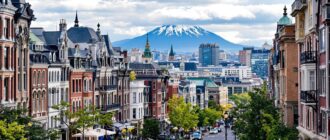
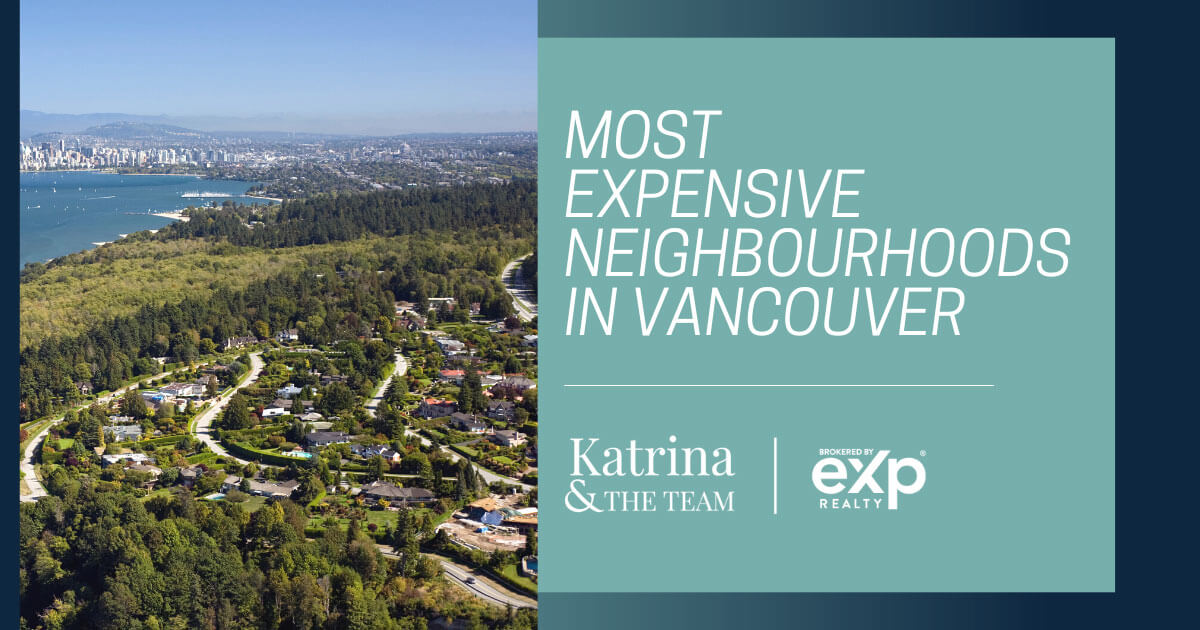 Vancouver’s most expensive neighborhoods attract the majority of development activity
The CMHC data shows that these transit-oriented developments aren’t just selling—they’re selling at record prices. Pre-sales for towers near SkyTrain stations often sell out within hours of launch, with buyers willing to pay premiums of 20-30% over comparable units in less connected areas.
Foreign Investment and Local Demand
The certainty that “everything will get sold” reflects more than just local demand. Vancouver’s international reputation as a stable, desirable place to invest has attracted capital from around the world, particularly from Asia. This global interest has created a secondary market where developers can count on both local end-users and international investors competing for the same units.
This dynamic has fundamentally altered the development calculus. Where developers in other cities might need to carefully study market absorption rates and price sensitivity, Vancouver developers operate in an environment where demand consistently outstrips supply, especially in the most desirable areas.
The Greenfield Paradox
The statistic about Vancouver having “very little greenfield land available” highlights a crucial planning challenge. Unlike Surrey or other suburban municipalities that can expand outward, Vancouver is geographically constrained by mountains, ocean, and municipal boundaries. This limitation forces all growth to occur through densification of existing neighborhoods.
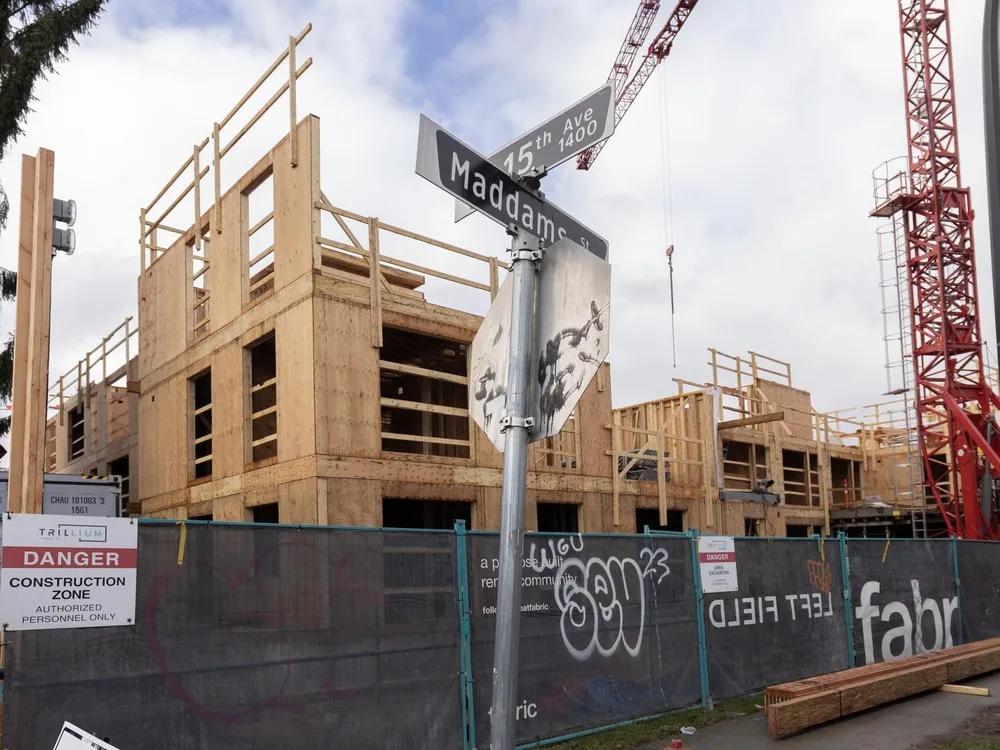
Densification projects transform Vancouver’s established neighborhoods
The result is that every development project becomes a neighborhood-changing event. When a single-family home is replaced by a 20-story tower, it doesn’t just add housing units—it fundamentally alters the character, infrastructure demands, and social dynamics of the surrounding area.
Community Resistance and Planning Challenges
This concentration of development activity in Vancouver’s most established neighborhoods has created predictable friction. Long-time residents see their communities transformed rapidly, often without adequate consultation or infrastructure upgrades to support increased density.
The “uproar about some development or another” mentioned in the original post reflects this tension. Unlike sprawling suburban development that might go unnoticed, Vancouver’s infill development affects established communities where residents have strong attachments to existing character and scale.
Regional Implications
The Metro Vancouver Housing Data Book referenced in the original post reveals broader regional implications of this development pattern. While Vancouver builds towers, suburban municipalities struggle with different challenges—managing sprawl, providing adequate transit, and creating walkable communities.
This creates a two-tier housing market: expensive, transit-connected urban housing in Vancouver, and more affordable but car-dependent suburban housing in places like Surrey. The gap between these markets continues to widen, affecting regional equity and mobility patterns.
Market Sustainability Questions
The “eternally attractive” nature of Vancouver’s development market raises questions about long-term sustainability. Can a market that depends on ever-increasing prices and international capital continue indefinitely? The 2016 data represents a peak moment in Vancouver’s development cycle, but market conditions have proven more volatile than the “certainty” suggested at the time.
The concentration of development in the most expensive neighborhoods also raises equity concerns. If new housing supply is focused in areas already unaffordable to most residents, does it actually address the broader housing crisis, or does it simply serve high-end demand while leaving middle and lower-income households underserved?
Looking Forward
The development patterns described in these statistics have continued to shape Vancouver’s evolution. The focus on transit-oriented, high-density development has created a more urban, walkable city, but it has also contributed to displacement pressures and affordability challenges that continue to dominate municipal politics.
Understanding these dynamics—why developers concentrate in certain areas, how transit access drives development decisions, and why Vancouver’s market operates differently from its suburban neighbors—provides crucial context for ongoing debates about housing policy, neighborhood character, and regional growth management.