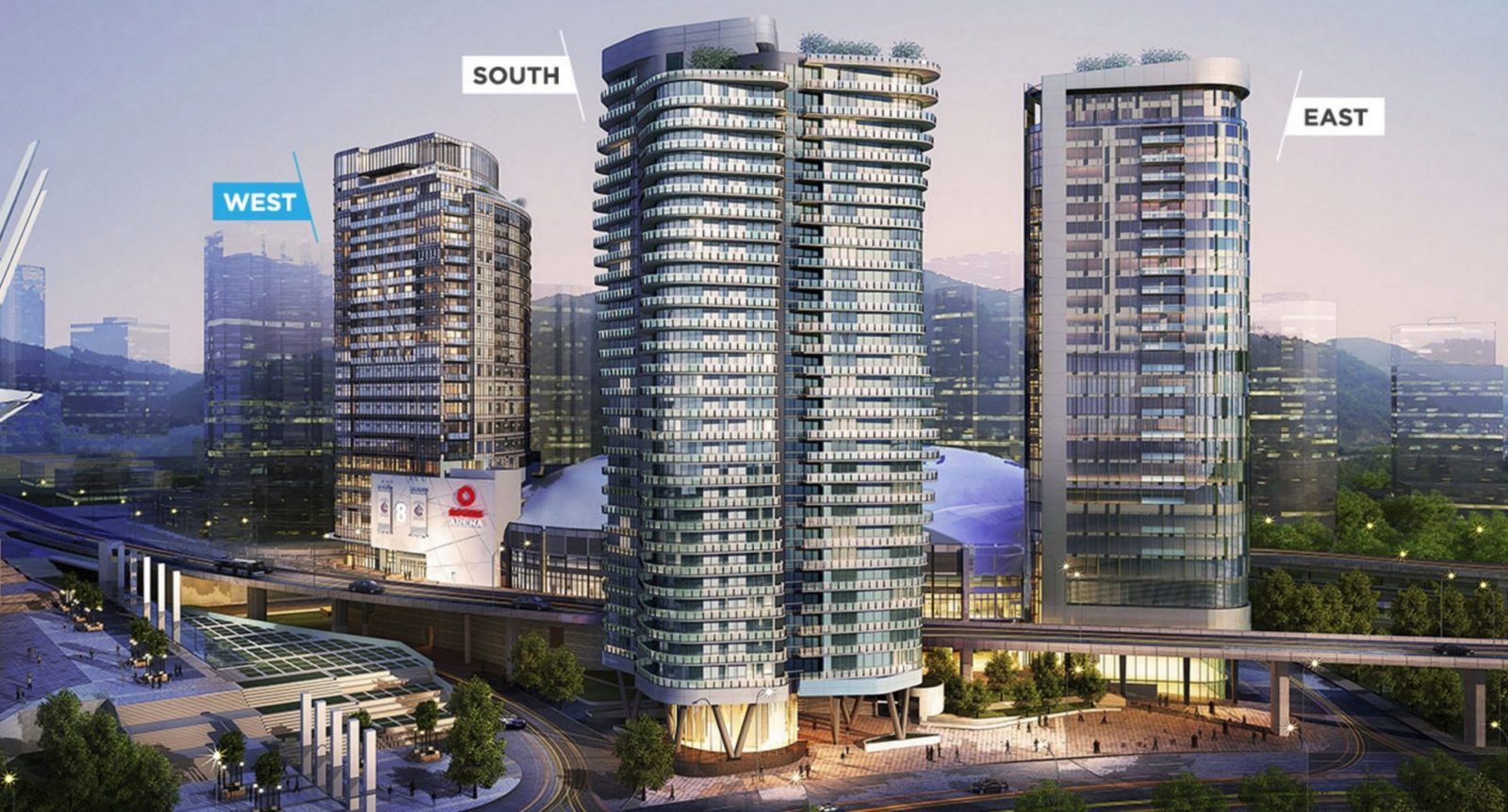
Planners finally put a price tag to the community-amenity contribution dollars the city won’t get as a result of Aquilini deciding to build rentals, not condos, in its 400,000 square feet of residential space in three towers around Rogers Arena.
Strangely, though, that wasn’t the topic of many questions at the public hearing last week. As I noted in my Globe story today, the local residents association said that they were okay with that as long as they did get the key amenities funded in the neighbourhood that they want: the Canucks practice rink that will function as a part-time community centre, the daycare, and the pedestrian skybridge over Pacific Boulevard.
The Economics of Development Financing
The $35 million shortfall represents a significant shift in Vancouver’s development financing model. Community Amenity Contributions (CACs) typically run much higher for condominium developments because they generate greater profits for developers than rental projects. The lost revenue was originally earmarked for a range of public improvements across the Northeast False Creek area, including potential upgrades to aging infrastructure and new community facilities.
This decision reflects broader market realities facing Vancouver’s development industry. While the rental market has strengthened considerably, the profit margins remain tighter than condo sales, particularly for luxury units. Aquilini’s choice to go rental suggests confidence in long-term rental income streams, but it also means the city loses the upfront capital that CACs provide for immediate community improvements.
The Rental Housing Trade-off
From a housing policy perspective, Aquilini’s decision aligns with the city’s stated goals of increasing rental supply in a market where vacancy rates hover near historic lows. The 614 rental units will add significant supply to the downtown core, though critics argue they’ll be priced at market rates that remain unaffordable for many residents.
The timing is particularly relevant given ongoing debates about Vancouver’s rental crisis. While these units won’t address the need for truly affordable housing, they may help reduce pressure on the existing rental stock by providing options for higher-income renters who might otherwise compete for more affordable units.
Community Priorities and Negotiated Benefits
The local residents association’s pragmatic response reveals interesting priorities in community planning. Rather than fighting the reduced CAC revenue, they’ve focused on securing specific amenities that directly benefit their neighbourhood. The Canucks practice rink doubling as a community centre represents an innovative approach to maximizing facility use, while the daycare and skybridge address immediate local needs.
This negotiated approach suggests a maturing relationship between developers, city planners, and community groups, where specific local benefits can sometimes outweigh broader financial contributions to the city’s general revenue.
It wasn’t clear to me, from listening at the meeting, how the loss of $35 million of CACs from the originally projected total of $125 million from all Northeast False Creek development will affect city plans for other amenities. Originally, there was talk of using amenity dollars to upgrade the Aquatic Centre. Perhaps that’s no longer an option? I’ll have to check.
The Noise Bylaw Innovation
Oddly enough, in spite of criticism from some groups about the lack of truly affordable rental units in the area (the Aquilini’s 614 will rental at standard rates for new apartments), most of the questions at the public hearing were about the new noise-bylaw standards the city is allowing in the area.
Instead of the usual 70 dBC limit that applies in the rest of the city, this area will allow 82 dBC measured from the roof of Rogers Arena (the usual maximum noise of a concert), although demanding that Aquilini ensure that the noise level in people’s living rooms is no more than 50 dBC and in their bedrooms, no more than 40 dBC. Buy your noise monitors now, future tenants!
This innovative approach to noise management could set precedents for future developments near entertainment venues, balancing the realities of urban living with quality of life considerations.